Characteristics of a Aardvark
1. Aardvarks have long, sticky tongues, which can be up to 12 inches (30 centimeters) long. Each night, they are able to dig up termite mounds and ant nests and slurp up and swallow tens of thousands of insects. Aardvarks are most active at night and tend to live alone.
2. Its stout, piglike body (“aardvark” is Afrikaans for “earth pig”) may be as long as 6 ft (1.8 m), including a 2-ft (60-cm) tail. It has a long snout, rabbitlike ears, short legs, and long toes with large, flattened claws.
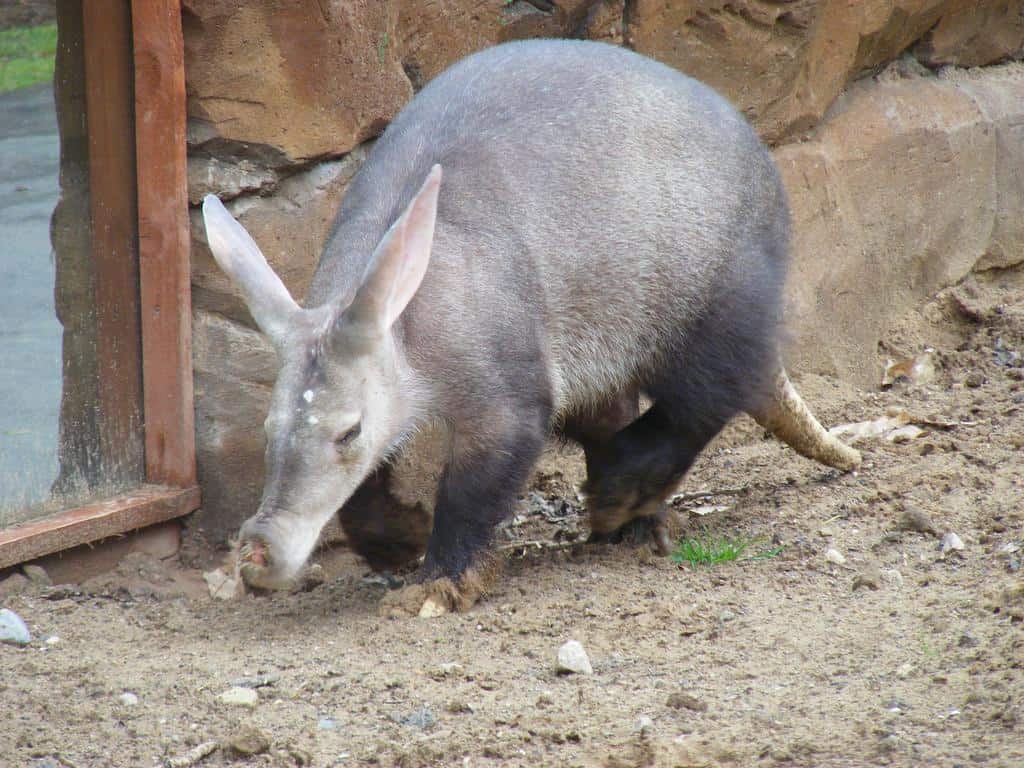
3. Adaptations: Terrestrial, solitary, nocturnal, large eyes with retina containing only cones. Nostrils close up when the aardvark burrows, providing protection from dust, dirt, and attacks by ants or termites. Powerful claws for digging into ground or termite nests. Acute sense of smell and hearing.
4. Aardvarks are digitigrades, meaning they walk on their toes, and not on the soles of their feet. The time it stands on its soles is when an aardvark squats. They can eat 50,000 to 60,000 ants and termites in one night. Aardvarks are good swimmers
5. Habitat and range: Aardvarks are found in sub-Saharan Africa, where suitable habitat (savannas, grasslands, woodlands and bushland) and food (i.e., ants and termites) is available. They spend the daylight hours in dark burrows to avoid the heat of the day.
6. Moreover, Aardvark is friendly in nature towards human beings. Just you need to be aware of its sharp nails. Snow Africa Adventures are concerned to save these epidemic species by sharing knowledge about them.
7. Nocturnal activity patterns allow aardvarks to conduct digging activities under relatively cool conditions, thus avoiding hyperthermia due to body heat production during hot conditions, while the diurnal activity patterns of most prey species means that they are inactive when aardvarks are foraging and can, therefore,
8. An adaptation is a characteristic that helps an animal survive in its habitat. All animals must be able to obtain food and water, protect themselves from harm, withstand the climate, and reproduce young so the species doesn't become extinct.
9. Once an adaptation occurs, it generally falls into one of three main types: structural, physiological, or behavioral.
10. Aardvarks have strong claws on each of their spade-like feet that, along with the fact that their hind legs are longer than their front legs, make them strong and capable diggers able to excavate vast amounts of earth at an alarming rate.
Comments
Post a Comment